Compare your companies in one view
See each company's results alongside the group total for the same dates, so you can identify which business is contributing what.
Understand the companies you own, together and individually. Bring a small group's management figures into one review, with a clear view of what each company contributes.

With us




 Fintable



 Marquez
Works with your AI assistant
See each company's results alongside the group total for the same dates, so you can identify which business is contributing what.
Separate identified intercompany sales and costs from the group figures, so trading between your own companies does not inflate the view.
When one company records an internal transaction differently from the other, the difference stays visible for your accountant to investigate.
The group view uses the same figures as each company's own statements. Compare contributions without rebuilding the numbers in a separate spreadsheet.
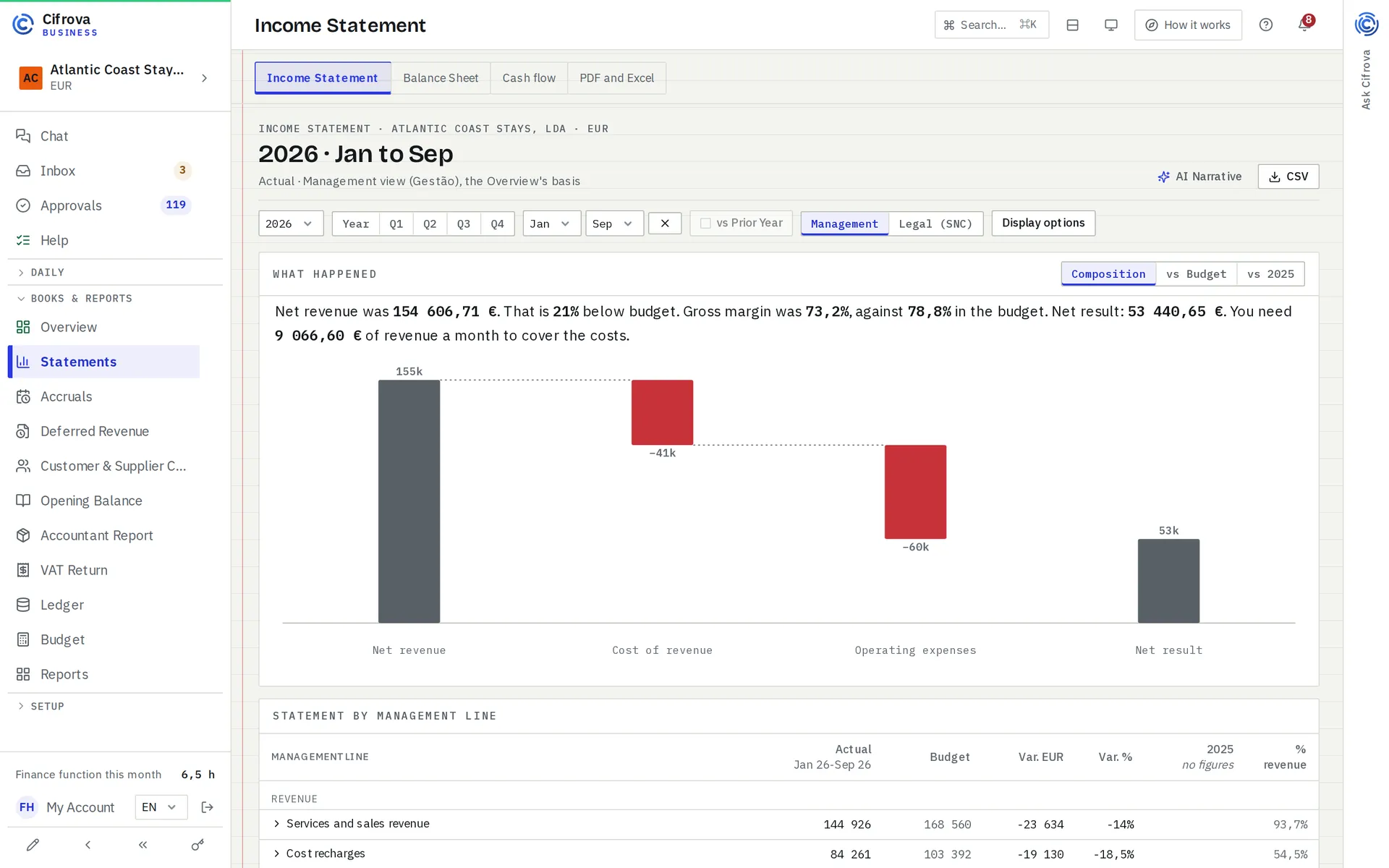
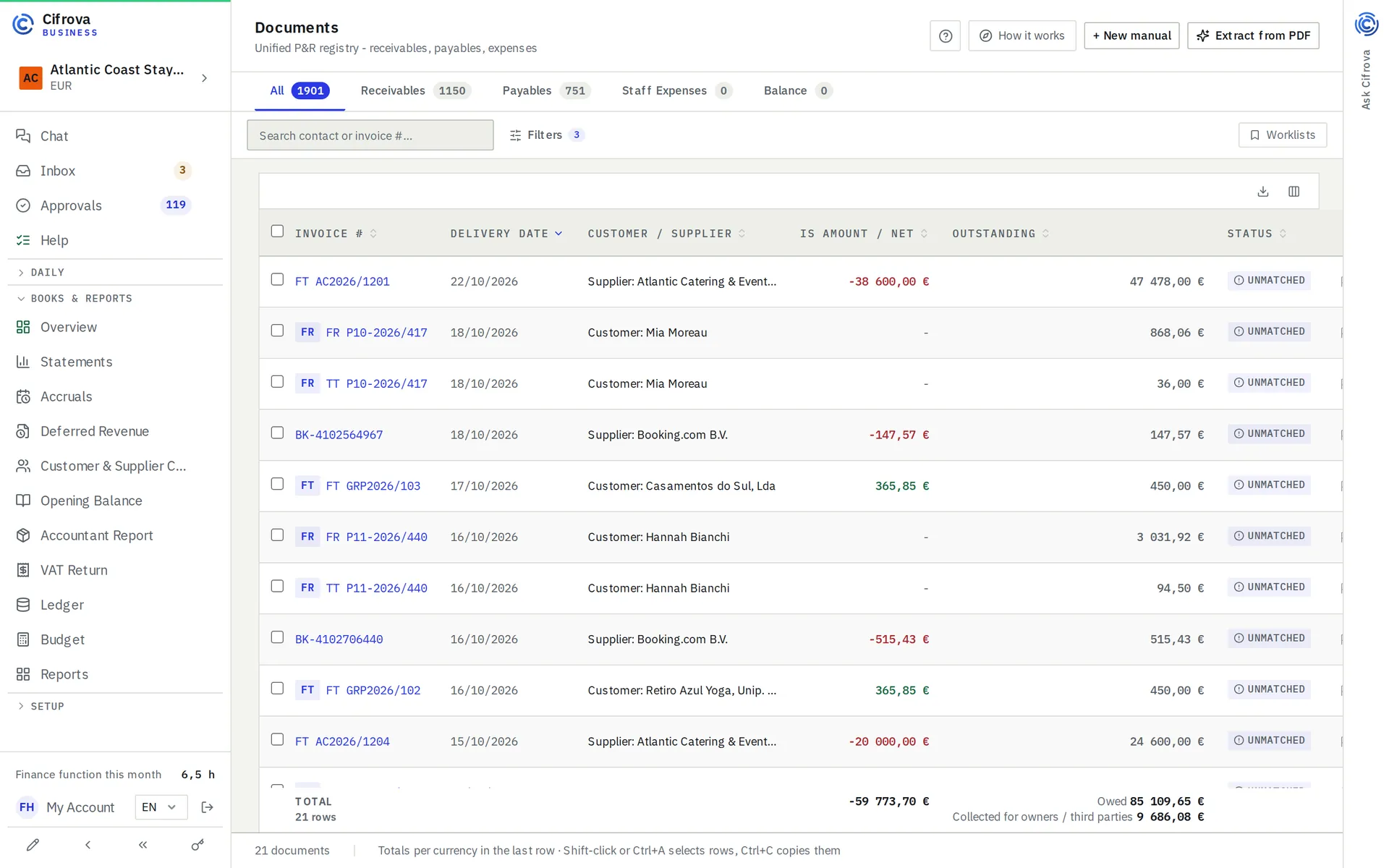
Documents remain with their company, giving your accountant the evidence needed to investigate an intercompany difference instead of guessing which entry is missing.
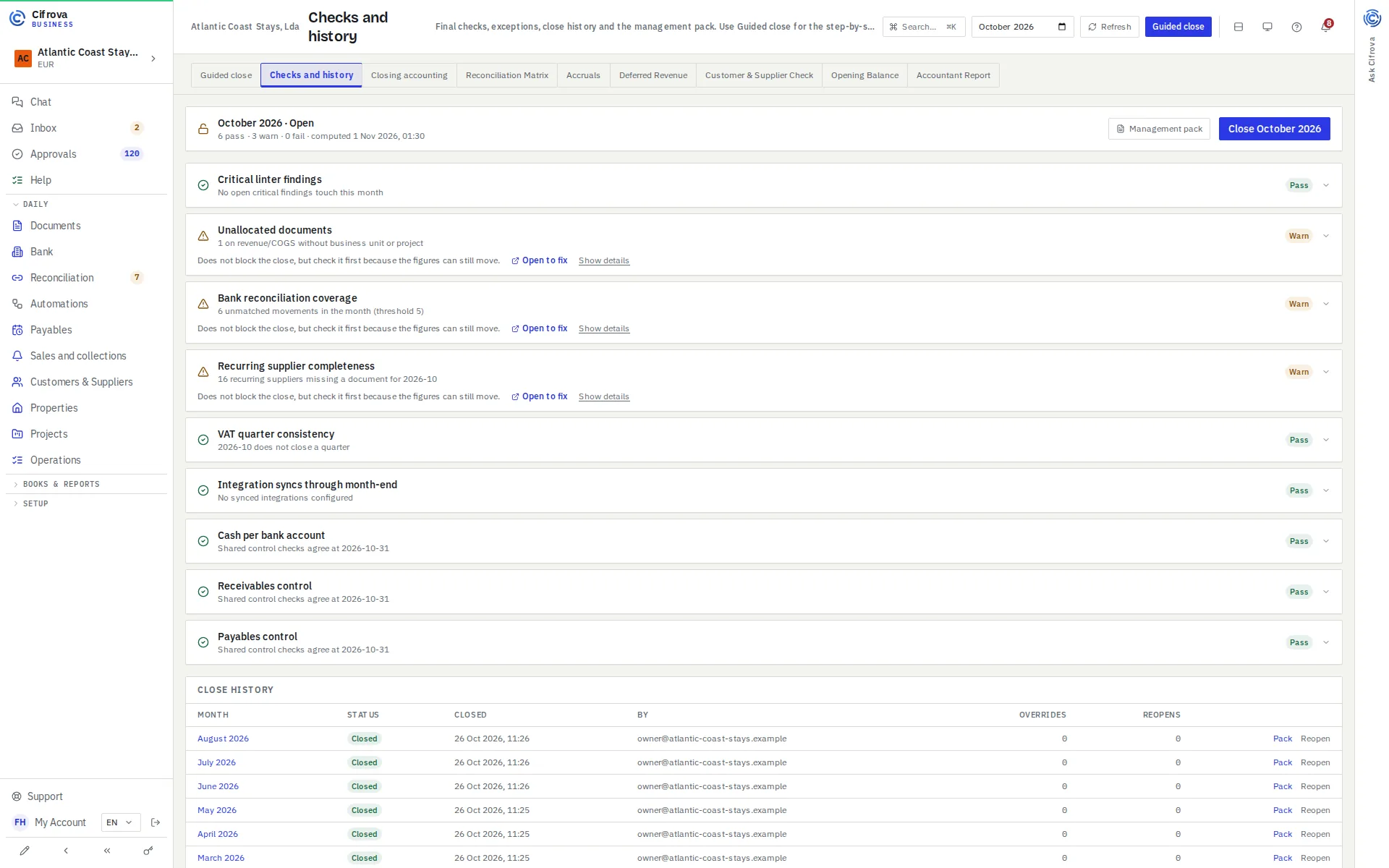
Work through each company's month-end questions before the group review, keeping missing records and unresolved items visible alongside the reporting period.
This is management reporting for a small group. Agree the entities, period, currency and intercompany adjustments with your accountant before relying on a combined result.
Income statement, balance sheet and cash flow with company columns, intercompany eliminations, minority interest and a group total. Access is required for each company included.
Use the first conversation to check the group setup and required reports. Statutory consolidation, complex structures and specialist accounting needs require a separate assessment.
The scope is small, owner-led groups and management reporting. Complex group structures, statutory consolidation and specialist currency requirements need a separate assessment.
Yes. The group reporting approach keeps per-company figures available, while the records remain with their own company. Access must be agreed for each entity.
The group view removes tagged internal sales and costs, and mirrored receivable and payable balances. Shareholdings are eliminated against the equity of the companies you own, and the share of the profit that belongs to minority owners is shown as minority interest. Dividends between group companies are eliminated too. Differences remain visible for review; agree any further adjustments with your accountant.
Tell us what you need and we will get back to you.